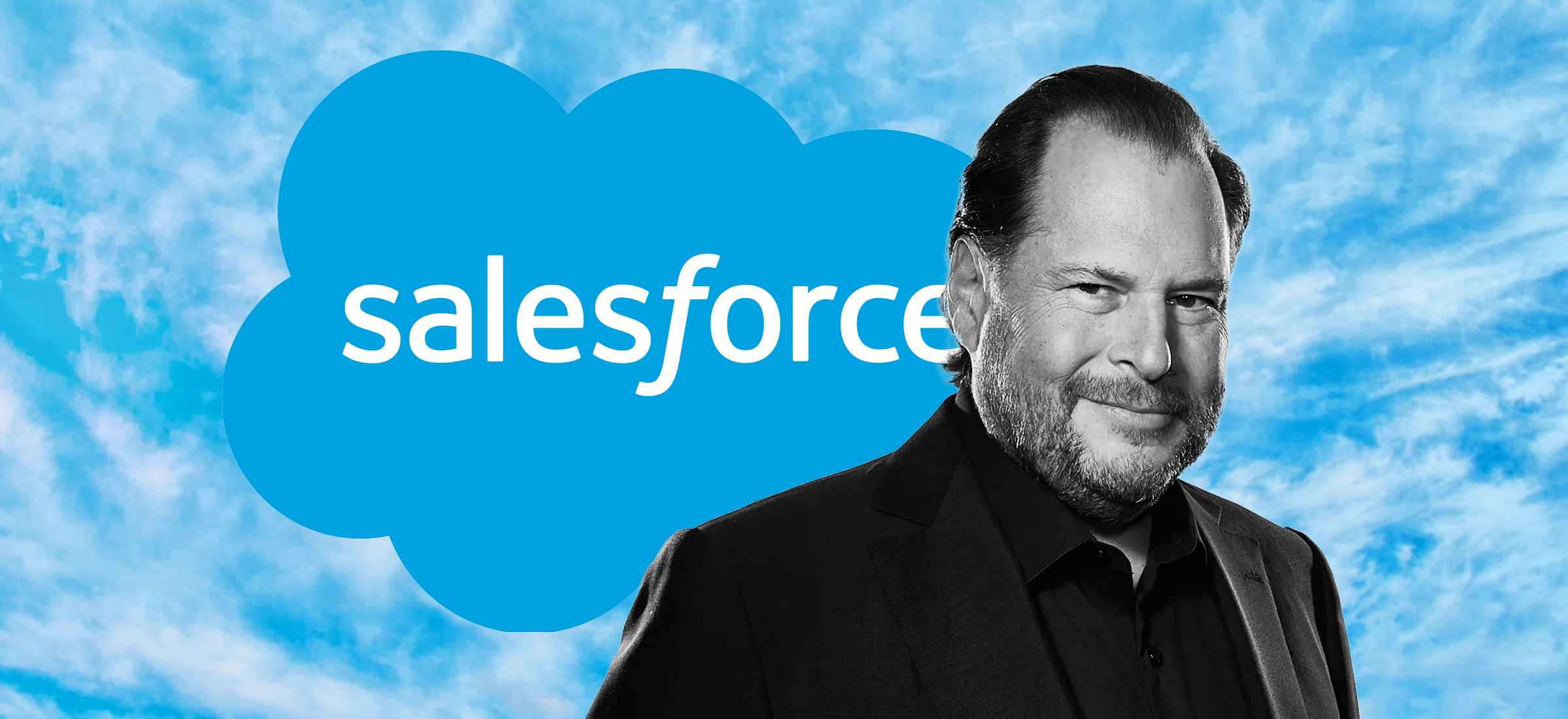
Marc Benioff did not bury the message. He went on a podcast and said it out loud. Three hundred million dollars to Anthropic. Software that is cheaper to build. Coding agents and humans working side by side. He told investors he can go faster than ever before.
Read past the bravado and the direction of travel is clear. The big vendors are no longer selling you software. They are selling you AI agents. Salesforce is spending on agents that write code. SAP is building agents that run business processes. The two are not the same animal. But they point the same way. The value is moving up a layer, from the software you license to the agents that act on top of it.
For a CTO, this is not a product announcement. It is an architectural decision. And it is the biggest one your SAP estate will face this decade.
The decision in front of you
You will be offered AI agents for your SAP landscape. Joule and what comes after it. Agents that close periods, chase approvals, reconcile accounts, answer queries, move data between systems. Some will be useful. Some will be sold harder than they deserve.
But whatever you decide, two things will shape whether it goes well.
The first is whether you can see what the agents are doing. The second is whether you control what they are allowed to do. Get those two right and most other things are recoverable. Get them wrong and you are running part of your business blind, on terms someone else set.
This is the unglamorous part. It is also the part that matters. Let’s dig into it.
Visibility: can you see what the agent did?
An AI agent inside your business takes actions. It posts an entry. It releases a payment. It updates a record. It tells a customer something. You need to know what it did, when, on whose behalf, and why.
The vendor will tell you the agent is logged. It probably is. Do the logs answer the questions you will be asked?
Your auditor will not ask “did the agent run.” They will ask “show me every credit decision the agent made last quarter, the data it used, and the rule it applied.” Can your logs produce that? In a format a human can read? Fast enough to matter? Held for long enough to satisfy your retention rules?
There is a difference between a system that records what happened and a system that lets you find out. Many logs are built for the vendor’s engineers, not your audit team. They show errors and uptime. They do not always show business decisions in business language. Before you sign, ask to see a real log of a real action. Ask who can read it. Ask how long it is kept. Ask whether you can export it, or whether it lives on the vendor’s side and disappears when the contract ends.
Visibility is not a feature you tick. It is the difference between knowing what your business did and assuming it.
Governance: who decides what the agent is allowed to do?
This is the heart of it.
Every agent comes with settings. What it can do alone. What needs a human to approve. What it must never touch. Those settings have defaults. The defaults were chosen by the vendor, to suit the vendor’s idea of a sensible customer. They were not chosen for you.
The first piece of work is to decide, process by process, what the agent is allowed to do on its own and what needs a person in the loop. A query lookup, fine, let it run. A payment above a threshold, no, route it to a named human. This mapping is tedious. It is also the work that protects you. Skip it and you have accepted the vendor’s risk appetite as your own.
The second question is who can change those settings, and how. If the only way to tighten an agent’s permissions is to raise a ticket with the vendor and wait, you do not control the agent. The vendor does. If your own admin team can change permissions through a console you hold, you are in charge. This distinction is invisible when you buy. It becomes the whole game the day something goes wrong.
The CTO who comes out of this decade in good shape is the one who kept sight and control as the agents took on more
Which brings us to the third question. What happens when an agent gets it wrong? Because one will. Read the contract and you will find the vendor’s liability is thin. A refund of fees, perhaps. Not the cost of the mistake. The business consequence lands on you, whatever the cause. You need an answer ready. Who notices first. How fast. Who can stop the agent. How you roll back. Who tells the customer or the regulator. Design that response before you deploy. Designing it during the incident is the worst possible time.
None of this is anti-AI. It is what responsible deployment looks like. The governance we are describing is yours, not the vendor’s, because it is your business that carries the result.
Nothing Stands Still
Here is the thing about agents. They do not stand still. The agent you switch on this year will do more next year. The vendor will add capabilities. Your own teams will find new uses. What you governed carefully at launch will quietly grow past the rules you set.
The regime needs a pulse. A regular review. Someone whose job is to ask what the agents are doing now that they were not doing six months ago, and whether the controls still fit. Without that, your governance freezes at the moment you signed, and the agents drift beyond it.
The CTO who comes out of this decade in good shape is not the one who adopted fastest, or the one who held back longest. It is the one who kept sight and control as the agents took on more. Who could always answer two questions: what are they doing, and who decided they could.
That is harder than it sounds, and it is not work the vendor can do for you. The vendor sells the agent. The system integrator earns on its rollout.
Neither is paid to slow down and ask whether you can still see what is happening, or whether you could turn it off if you had to. Those questions fall to you — and they are easiest to answer at the start, when visibility and control can be designed in, rather than later, when part of your business is running on agents you cannot see.
That is the unglamorous part. It is also the decision no one will put in front of you. If you don’t make it, it gets made by default.
Pivot takes no fees, commissions or referral payments from any software or AI vendor.
Image courtesy of Salesforce