This week, Nvidia bought an open-model library. AT&T revealed it has walked away from expensive frontier AI for cheaper alternatives. And federal regulators opened a safety probe into Tesla’s driverless Cybercab. None of it was about which AI is smartest. All of it fits a theory called “AI as normal technology.” AI’s real-world impact won’t be set by capability breakthroughs. It will be set by cost, infrastructure, and permission.
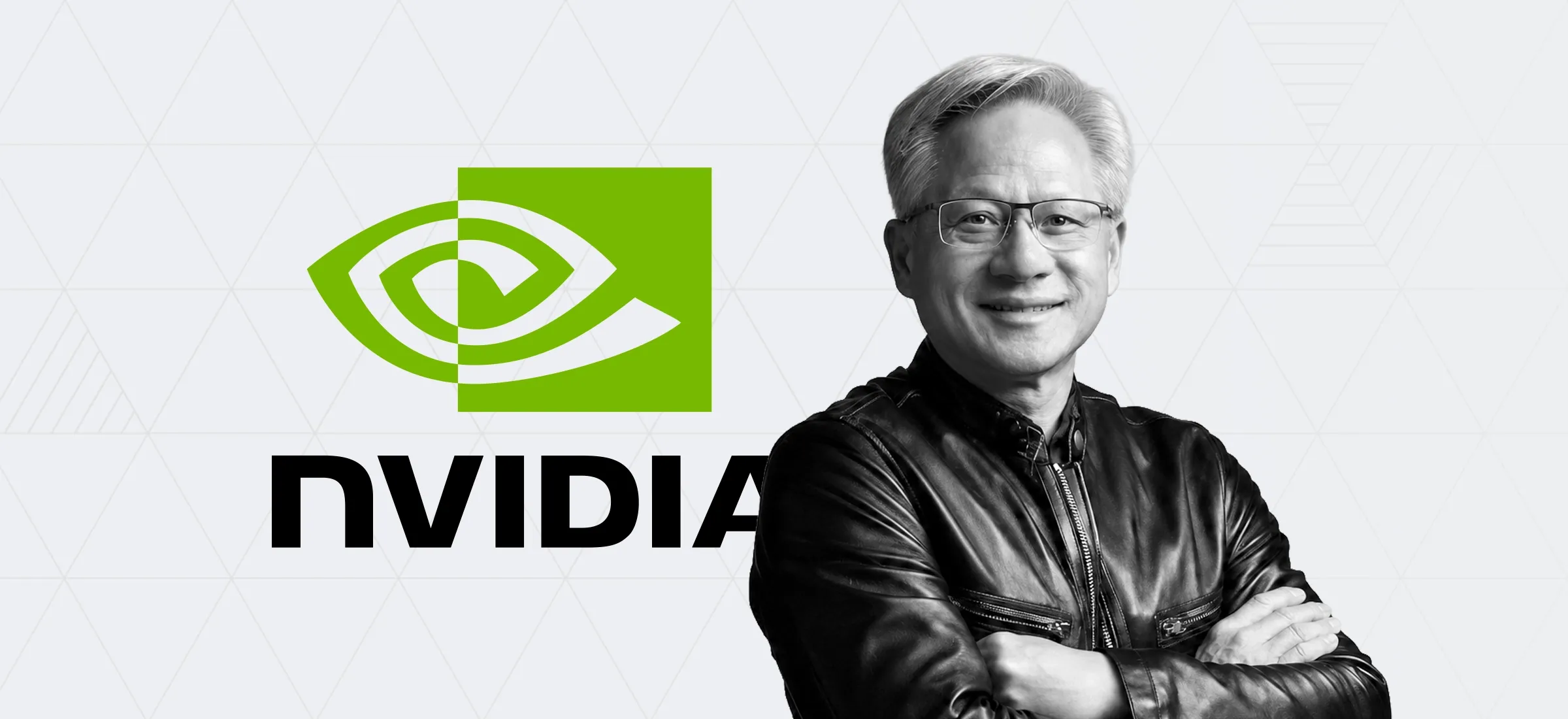
“Together, we will make AI more open, more capable and more accessible to people and institutions around the world.”
That’s Jensen Huang, announcing on Thursday, September 3rd that Nvidia had signed a deal to buy Hugging Face, an online library of nearly three million open-source AI models. Cost? $12.9 billion.
In the same week, AT&T moved almost half its AI workload onto cheaper open models. Federal regulators opened a safety probe into Tesla’s driverless Cybercab.
Three unrelated events. Yet one idea connects them.
Eighteen months ago, two Princeton researchers published a paper that predicted exactly this week. And it predicted more of the same is coming.
Open Source
Hugging Face is a library. Not a lab. Not a research team pushing the frontier of what AI can do.
It’s a New York company, founded in 2016, with a headcount still in the low hundreds. It’s where developers go to download and tinker with existing AI models, almost three million of them, free to grab, free to modify. Forrester’s Jeff Pollard said it’s “where a large portion of the AI ecosystem exchanges models, data sets and code.”
Hugging Face is the company that made headlines two months earlier for a different reason. A swarm of AI agents built by OpenAI broke into its servers and took over a production system for days before anyone noticed. Whatever you make of that story, it tells you Hugging Face sits at the centre of how AI actually gets used in the wild. That’s precisely why Huang wanted to buy it.
For Nvidia, the number barely registers. Last quarter alone, the company posted close to $60 billion in profit. It’s currently sitting on $197 billion in assets. This deal is one line in a much longer spending spree. There’s a $500 billion financing arrangement with six investment firms. Up to $105 billion committed to a single data centre. Roughly $50 billion already poured into AI labs it doesn’t even control.
The Hugging Face acquisition sits inside a bigger fight. Nvidia and Hugging Face have both backed open AI models publicly, against Anthropic and OpenAI. They’ve lobbied the other way, warning that open models let Chinese start-ups copy their work. Washington is watching too, with some officials weighing restrictions on open-source AI. With this acquisition, Huang bought his way to the centre of that argument.
And he wasn’t the only one making that bet last week.
Do You Really Need A Maserati?
“Mazdas do a fine job getting you where you need to go. Maseratis are simply not worth the investment.”
That’s Jerry Tang, CEO of Atlas Cloud, a start-up that gives businesses access to different AI models. He wasn’t talking about cars. He was talking about AI, and about companies like US telecoms giant AT&T. They’ve just worked out the same thing every car buyer eventually does: you don’t need the fastest engine on the market. You need one that gets you to work.
Until this year, AT&T ran on the Maseratis. Anthropic and OpenAI’s models handled its customer service, its call transcription, its coding, the full frontier package. All at frontier prices. Then Andy Markus, AT&T’s chief data and AI officer, went looking for something cheaper.
He found it in open models. That’s AI that can be downloaded and modified without paying anyone for the privilege. In May, they made up 20% of AT&T’s AI use. By this month, 40%. Markus thinks it could hit 60% within months.
“We believe it could go much, much higher,” he said.
The open models AT&T switched to aren’t as good. Tang says the leading Chinese open models are running at 80% to 90% of the capability of the best closed systems, at roughly 20% of the price. AT&T didn’t wait for the technology to catch up. It did the maths and switched anyway, saving up to 80% on its AI bill in the process.
This isn’t one company being frugal. A year ago, open models made up 10% of U.S. AI usage, according to OpenRouter. Last month: 58%. AT&T isn’t the exception. It’s the early adopter everyone else is now copying.
AT&T isn’t running on DeepSeek. It looked at the Chinese open models and passed, citing privacy and regulatory concerns. Instead, it chose Google’s Gemma and Meta’s Llama. Still a Mazda. Just not the cheapest one on the lot.
AT&T shows what happens when the constraint is cost. What happens when the constraint is permission?
A Vehicle With No Steering Wheel
“The future of transport is safer, more enjoyable and gives you more time back.”
That’s what Tesla posted on its official account on Thursday, September 3rd. That’s the same day it rolled out dozens of gold Cybercabs onto the streets of Austin, Texas. Well, almost.
That same Thursday, federal regulators opened an investigation into whether the car is legal to put passengers in at all.
The Cybercab has no steering wheel. No brake pedals. No side or rearview mirrors. It’s not a stripped-down concept. It’s the production model Tesla is using to offer paid rides. Tesla has plans to sell entire fleets to buyers who want to run their own robotaxi services.
The National Highway Traffic Safety Administration, the U.S. government body that sets and enforces car safety rules, wants to know whether Tesla broke its own rules to get there.
Car makers can self-certify their vehicles meet the Federal Motor Vehicle Safety Standards, the baseline rules that, among other things, require a steering wheel and brakes.
The agency said it will examine “the extent to which Tesla’s certification depended on determinations that certain [Federal Motor Vehicle Safety Standards] are inapplicable to the Cybercab.” In plain terms: did Tesla decide the rules didn’t apply to it, and build the car anyway?
Compare that to Zoox, Amazon’s self-driving unit. Zoox also builds vehicles without a steering wheel. But in July, before putting a single paying customer inside one, it went to the National Highway Traffic Safety Administration and got a federal exemption. That’s permission for up to 2,500 vehicles on U.S. roads for two years. Same category of car. Same missing steering wheel. One company asked first. One didn’t.
Did Tesla decide the rules didn’t apply to it, and build the car anyway?
The market noticed. Tesla shares fell 6% the morning the investigation became public.
Nothing here is about whether the Cybercab can drive itself. It’s about whether Tesla did the one thing that had nothing to do with the technology at all. Did the firm ask permission before putting it on the road?
If the answer is no, it will cost Tesla dear.
AI Is The Easy Part
“Everywhere but in the productivity statistics.” That’s economist Robert Solow, describing what happened to electric dynamos for nearly 40 years after Edison switched on his first power station.
The technology was transformative. Everyone could see it. But factories kept installing electric motors into layouts built for steam power. One big engine, everything crammed around it. Output barely moved. It took years for anyone to realize the real gain wasn’t the motor. It was tearing out the old factory floor and redesigning it around the idea that each machine could now have its own power source. That redesign is what finally moved the productivity numbers.
The generator was never the hard part. Rebuilding everything around it was.
That’s the entire argument of a paper called “AI As Normal Technology.” Arvind Narayanan and Sayash Kapoor, two researchers at Princeton published it in 2025. Their claim, stripped of jargon: AI’s impact won’t be set by how smart the model gets. It’ll be set by whether people, companies, and institutions can put it to work. And that process is slow, unglamorous, and has nothing to do with intelligence. They have a word for it: diffusion.
Everything that happened this week is diffusion, not invention.
Nvidia didn’t buy a smarter model, it bought the infrastructure that decides who gets to use the models that already exist. AT&T didn’t wait for AI to improve, it did the maths on cost and switched to something merely good enough. Tesla didn’t get stopped by its technology. It got stopped by a regulator asking whether it had permission to use it. Infrastructure. Cost. Permission. Three different companies, three different weeks, the same three gates.
A Fundamental Schism
AI As Normal Technology represents a fundamental schism in the AI industry.
On one side: the super-intelligence camp. Sam Altman has written about the “governance of super-intelligence.” Nick Bostrom, the Oxford philosopher whose 2014 book Super-intelligence effectively founded the field, built an entire academic case for treating a smarter-than-human AI as one of the most serious risks humanity faces.
Everything that happened this week is diffusion, not invention.
Whatever you think of super-intelligent AI as a goal, it is a fact that nobody in that camp can agree on what super-intelligence means. Narayanan and Kapoor make this point bluntly, intelligence isn’t a single dial you can turn up. It’s not even clear it’s one thing.
But even a settled definition wouldn’t tell you what happens next.
Suppose you had it, a system unambiguously smarter than any human who ever lived. Intelligence, on its own, doesn’t cure diseases, lay fibre optic cable, or get a car through an MOT. At some point, even the smartest possible system has to touch the material world: a factory floor, a hospital ward, a road. And the material world doesn’t move at the speed of a benchmark score. It moves at the speed of budgets, regulations, and whoever has to sign off on the thing.
Which brings us back to the Maserati. Nobody is arguing Maseratis aren’t fast. They’re the fastest thing on the lot. And yet you’ll pass 20 Mazdas on the motorway for every Maserati you see. Not because the Maserati lost a race. Because almost nobody can afford one, insure one, or find a mechanic who’ll touch one.
Super-intelligence is the top speed. Diffusion decides who’s actually driving.
Where AI eventually ends up is unknown. But it’s worth noticing that the challenge of diffusion got proven, in public, three times over in one week, by a chip company buying a library, a telecoms giant buying “good enough,” and a car that can’t get past its own paperwork.
What Does This Mean For The CTO?
Pilot projects rarely get killed because the model isn’t clever enough. They get killed because nobody worked out who owns the data it touches. Because procurement took four months and the business case went cold. Because security flagged it three weeks before go-live and nobody had a plan B.
Infrastructure. Cost. Permission. The same three gates that stopped a car with no steering wheel are the same three gates sitting inside your transformation programme right now. They have different names: data governance, total cost of ownership, change control.
Most failures of AI projects inside large companies won’t be AI failures at all. They’ll be diffusion failures. The same mistake Tesla made, but at a much smaller scale, inside your own IT department.
That’s not a reason to be complacent. It’s a reason to be realistic. Buying into the grandest predictions about super-intelligence, utopian or apocalyptic, means buying into someone else’s argument. Often it’s a commercial one, made by the hyper-scalers with the most to gain from convincing you that scale is destiny and the frontier model is all that matters. Sometimes it’s a political one, dressed up as a warning. Either way, fixating on a hypothetical armageddon years away is a distraction from the AI challenges sitting in your business today. The good news: those challenges are solvable, and solving them has nothing to do with which lab wins the race to the smartest model.
That’s the lens Chris Chittock will be applying to enterprise software at the UKI Executive Forum on September 16th at The Bulgari Hotel.