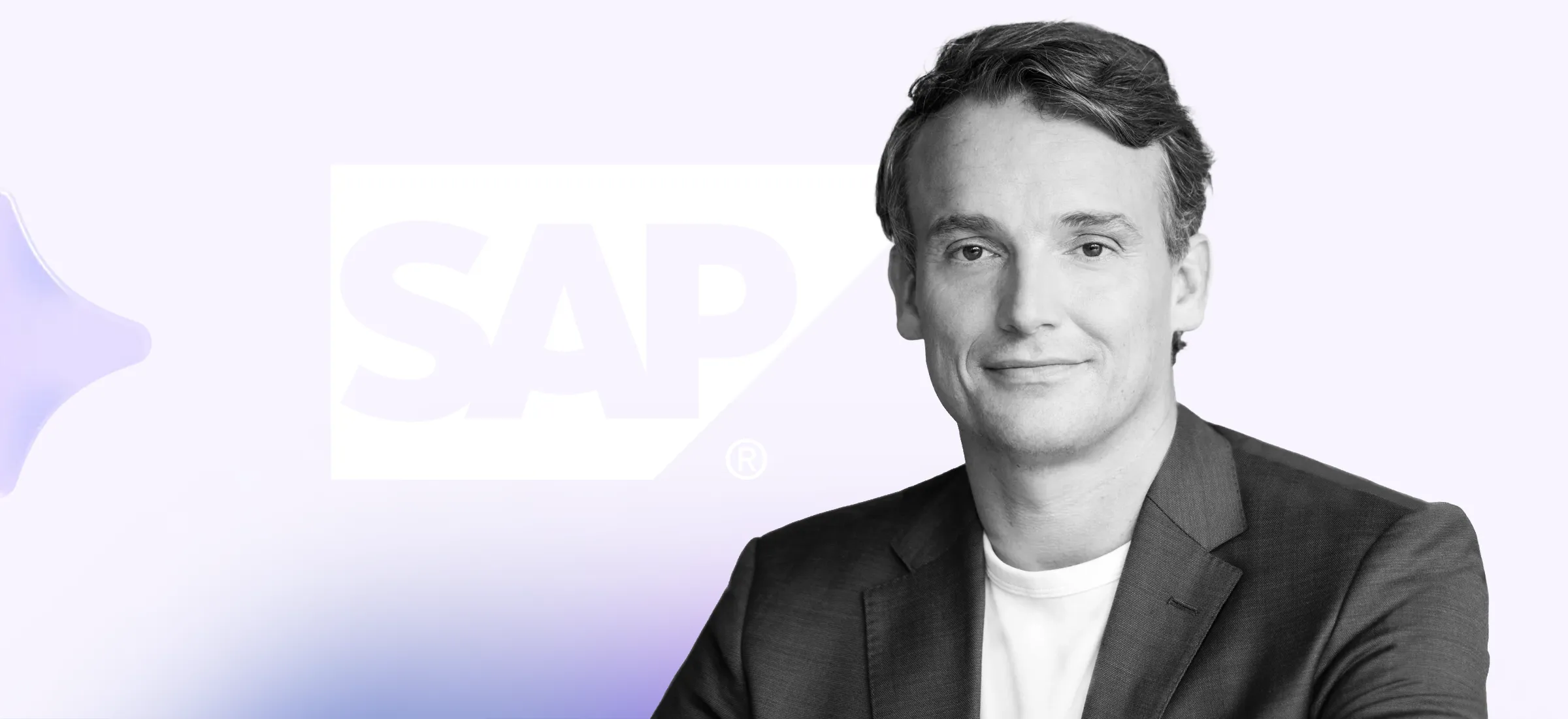
“Enterprise AI is at an inflection point.” At Sapphire in Orlando this week, Christian Klein told 30,000 employees and customers that the age of the Autonomous Enterprise had arrived.
“We’ve been reinventing how businesses run for over 50 years,” he said at SAP’s annual conference. “Now by infusing SAP’s ERP brain into the new SAP Business AI Platform, we’re solving one of the biggest challenges businesses are facing today: how to turn AI into business value.”
The pitch was an integrated stack. Joule Work as the new engagement layer. The SAP Autonomous Suite running more than 50 Joule Assistants across finance, spend, supply chain, HR and customer experience. The SAP Business AI Platform underneath. An Autonomous Close Assistant that compresses the financial close from weeks to days. It was a confident performance. Well-rehearsed. Big.
The Fortune piece running alongside it was a different document. More careful. AI needs context, Klein wrote. Without operational grounding, it produces activity without progress. Trust depends on data quality. Process integrity matters. Change management is the hard part.
Two messages from the same company in the same week. The marketing wrapper and the analytical content.
On both counts, he’s right.
LC Waikiki, the global fashion retailer SAP put on stage, cut certain queries from 10 minutes to three seconds. A 70% efficiency gain. A 50% drop in manual errors. That is operational AI doing operational work. AI grounded in ERP data, ERP processes and ERP governance works.
Fantastic. Now somebody has to deploy it.
Somebody has to decide what it touches and what it doesn’t. Somebody has to answer when it goes wrong. That somebody isn’t Klein. It’s you.
AI Compresses Tasks. Then Multiplies Them.
Every AI vendor promises the same thing. The technology saves time. At the task level, it does. Finance drafts analysis faster. Procurement evaluates more suppliers. Marketing ships more content.
What happens next?
The board sees the throughput and asks for more analyses. The CFO sees the modelling capacity and orders scenarios that were previously impossible. The CMO sees the content volume and expands the channel mix. Every AI deployment generates demand for more. More pilots. More integrations. More agents. More board questions.
The work doesn’t disappear. It moves up the org chart. It lands on the people responsible for governing the multiplication. It lands on you.
You Can’t Blame It On The Box
Mark Babington runs Britain’s Financial Reporting Council. Earlier this year he told the Financial Times something every CTO will commit to memory. You can’t blame it on the box. If you use this technology, you are still accountable for it.
That is the legal consequence of a technology nobody can stand behind. Vendors can’t warrant agent behaviour. Agents are non-deterministic. Same input, different output. No contractual promise possible. System integrators won’t carry the risk either. Read the contracts.
The person in the room with the most to lose is the person with the most to gain. That person is you.
The industry’s proposed answer is AI checking AI. That doesn’t solve the problem because the checker has the same probabilistic flaw as the thing it checks. At some point the buck has to terminate in a human. Under UK data protection law, that human is the data controller. That means your organisation. Which means, in practice, you.
The Autonomous Enterprise vision doesn’t change this. It raises the stakes on it. Every additional AI agent in your operational stack is another decision you signed off on. The exposure compounds with the deployment.
The Work Is In The Constraints
The work is in the constraints, as Klein said himself at Sapphire. “Moving to the Autonomous Enterprise requires serious change management.”
Where AI gets used and where it doesn’t. What governance sits around each deployment. What the audit trail looks like. Which decisions stay with humans. Which agents get retired when they start drifting. What you are willing to sign your name to and what you aren’t.
That work is the difference between an enterprise that looks back on this period as the one that delivered value and an enterprise that looks back on it as the one that produced expensive activity and an awkward conversation with the regulator.
The Job Is Bigger Now
The CFO who wants ten scenarios instead of two needs the CTO to make it possible safely.
The CEO who wants to tell investors the company is AI-native needs the CTO to make the claim defensible.
The board reads about AI in the FT and turns to the CTO for the answer.
Today the CTO decides where AI is deployed, what it’s allowed to do, and what the company can answer for when it does.
Klein gave a good speech in Orlando this week. He also put you on notice. The CTO job is now bigger than it was. The person in the room with the most to lose is the person with the most to gain. That person is you.
Pivot exists for the person in your chair. We’re SAP specialists. We don’t sell SAP, we don’t offshore. We tell clients the truth about what they need and what they don’t.
If the deployments ahead of you would go better with someone honest in the room, that’s what we do. Call us.
Image courtesy of SAP