
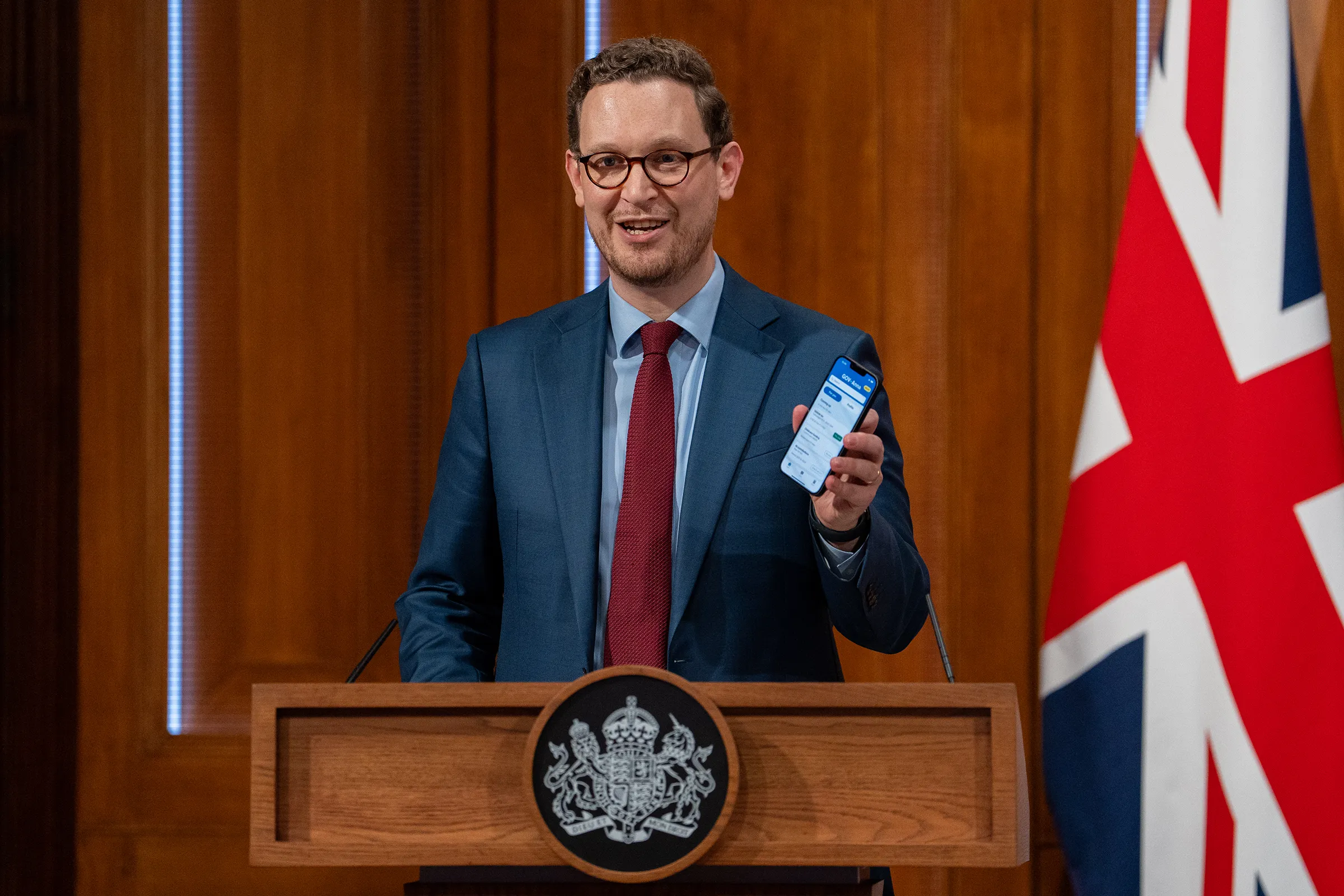
“In the future, you’ll be able to get all your government admin done in the time it takes to make a cup of tea.”
Those are Darren Jones’s words. The chief secretary to the Prime Minister made that promise last week, launching the government’s consultation on a national digital ID system. It would allow citizens to pay car tax, claim childcare vouchers, check their bin collection day. All from their smartphone. In minutes.
He’s right that it should work that way. The technology exists. The public wants it. Polling shows 62 per cent of British adults support the idea. Estonia has done it. Denmark has done it. Singapore has done it. Greece gas done it. The financial benefits exceed the cost of building it. By billions of pounds.
But the app is the easy part. What does it take to make it work?
Mind The Gap
GOV.UK One Login has been live since 2021. It’s a centralised sign-in and identity verification system for UK government services. After three years of operation, it serves 50 government services and has around three million active users.
The UK has 52 million adults. That is not a slow start. That is a structural problem. And it points to the challenge the digital ID programme has not yet confronted.
When a citizen taps “claim childcare vouchers”, that request does not resolve itself. It has to connect to systems. HMRC holds the income data. The local authority administers the childcare entitlement. The identity check has to be verified against a government database. Each of those systems was built at a different time, by a different supplier, to a different specification. Some are on SAP. Some are on Oracle. Others run on legacy infrastructure that pre-dates modern integration standards. Many have been customised so heavily that even the teams maintaining them struggle to explain how they work.
The NHS has refused to share data with the digital ID programme. The Department for Education resisted integrating its own records. These are not rogue decisions made by awkward civil servants. They reflect the reality of how government technology works. It is in silos, built for departments, not for citizens.
Now the government wants all of it to talk to a single identity layer. Cleanly. Securely. At national scale. By 2029.
It is achievable. But it will not happen by building a good-looking app and hoping the back end catches up.
A Delivery Problem, Not A Technology Problem
The public debate has focused on the wrong questions. Build in-house or outsource to Big Tech? Voluntary or mandatory? App-first or infrastructure-first? These questions matter. But they are secondary to the one that determines whether any of this works.
How do you get systems that were never designed to talk to each other to do exactly that? Without breaking them, without replacing them wholesale, and without spending a decade finding out they won’t?
We have been solving that problem for more than 20 years. For global manufacturers running operations more complex than most government departments. The answer is not mysterious. But it requires a discipline that government IT programmes rarely apply.
Here is what I have seen work. And what I have seen fail.
Standard Before Custom
Every time a government department says its processes are too unique for standard software, a decision must be made. In my experience, the honest answer is almost always the same. The process is not unique. It’s just that it has never been challenged.
Standard enterprise software handles federated identity, permissions management, secure data exchange and legacy integration as a matter of course. It does this across dozens of countries for organisations running operations as complex as any government department. The moment you start customising, you start creating technical debt. And technical debt, in a programme this size, becomes a programme that never finishes.
The government has said it does not want a bespoke build handed to a US tech giant. Good. But the alternative is not to build something equally bespoke in-house. The alternative is to use proven, standard software. Without the customisation layers that inflate cost and guarantee future failure.
Start Small, Prove It, Then Scale
The temptation with a programme of this ambition is to design the whole thing before building any of it. That is how you get a 91-page consultation document that cannot produce a cost estimate. Is that where the government is right now?
The right approach is to start where identity verification is already standard practice. Right-to-work checks. Vehicle licensing. Benefit eligibility. Prove the integration model works. Then expand it.
Estonia did not build its digital ID infrastructure in a single programme. It built it service by service, over years, iterating as it went. It now has close to 100 per cent population take-up.
Each phase should deliver real improvements for real users and generate evidence that informs the next. That is how you build public trust alongside technical capability.
Put People In The Room
The reason most government IT programmes fail is not the technology. It is the physical distance between the people specifying the system and the people who will use it.
I have seen this pattern too many times. Consultants raising tickets, waiting for responses from teams in another time zone, the gap between what was asked for and what gets built widening with every sprint.
Integration work requires people who understand both the technical architecture and the business process. They need to be in the room. Sitting side by side with the teams inside the departments. Able to make decisions in real time. Not managing from a distance. Not waiting for sign-off through three layers of governance. Present, accountable, working to the same deadline as everyone else.
Leave Every Department More Capable Than You Found It
The civil service pension failure is a cautionary tale I keep coming back to. When the Capita contract ran into trouble, nobody could answer the most basic question: who understands this system now?
A digital identity infrastructure that only makes sense to the original supplier is not an asset. It is a liability.
Every phase of delivery should leave the department more capable than it was before. Civil servants must understand the architecture. They must be able to maintain it and extend it when requirements change. That is not idealism. It is the only way to protect a programme of this national importance from becoming hostage to whoever built it.
This Problem Has Been Solved Before
Global manufacturers integrate procurement, finance, supply chain and HR systems across dozens of countries and many legacy architectures every day. They connect acquired businesses with incompatible systems on tight deadlines. They meet regulatory requirements in jurisdictions with different data laws. At scale. Without building everything from scratch.
The challenge facing the UK’s digital ID programme is not different in kind. DVLA, HMRC, DWP and a hundred local councils are complex. But they are not uniquely complex. The discipline that solves it in the private sector is the same discipline required here.
Start With The Back End
The consultation closes in May. Legislation will follow. That is the political timeline.
The technical timeline starts now. And it starts not with the app, but with an honest audit of the systems the app will depend on. Which departments are on which platforms? Where is the custom code that will resist integration? Where are the data quality problems? Where are the governance gaps that caused the NHS and the Department for Education to hold back?
Those answers will determine the cost, the timeline, the sequencing and the risk profile of the entire programme. Without them, the consultation is making policy in a vacuum.
Jones is right that this could transform public services. He is right that billions of pounds in reduced fraud, improved tax collection, and faster benefit delivery is worth the investment. But he will only collect that prize if the systems behind the app are ready to deliver it.
Get the integration right, and a citizen really will be able to claim childcare vouchers in the time it takes to make a cup of tea.
Get it wrong, and it will not matter how good the app looks.
Image credit: CSPM Darren Jones unveils demo of Digital ID App by Joe Leates / Cabinet Office, licensed under the Open Government Licence v3.0.